Book your holiday for 2027 now to get the special discounted offer. No payments need until 2027



Discover Polonnaruwa: Sri Lanka’s Monumental Medieval Capital & UNESCO World Heritage Site
Walk through 12th-century royal palaces, colossal rock-cut Buddhas, and engineering marvels nestled in the heart of Sri Lanka’s Cultural Triangle.
About Polonnaruwa
Rising to prominence in the 11th and 12th centuries after the fall of Anuradhapura, Polonnaruwa served as Sri Lanka’s second ancient capital and experienced a golden age under King Parakramabahu I (1153–1186) and King Nissanka Malla (1187–1196). Today, this sprawling UNESCO World Heritage Site stands as one of the best-preserved archaeological parks in South Asia.
Unlike older capitals buried beneath modern towns, Polonnaruwa’s ancient core sits intact amidst lush jungle, serene lakes, and playful toque macaques. The city is a testament to medieval Sri Lankan urban planning—blending monumental Buddhist stupas, Hindu stone shrines from the Chola era, and the Parakrama Samudra ("Sea of Parakrama"), an immense 12th-century man-made reservoir that still irrigates the region today.
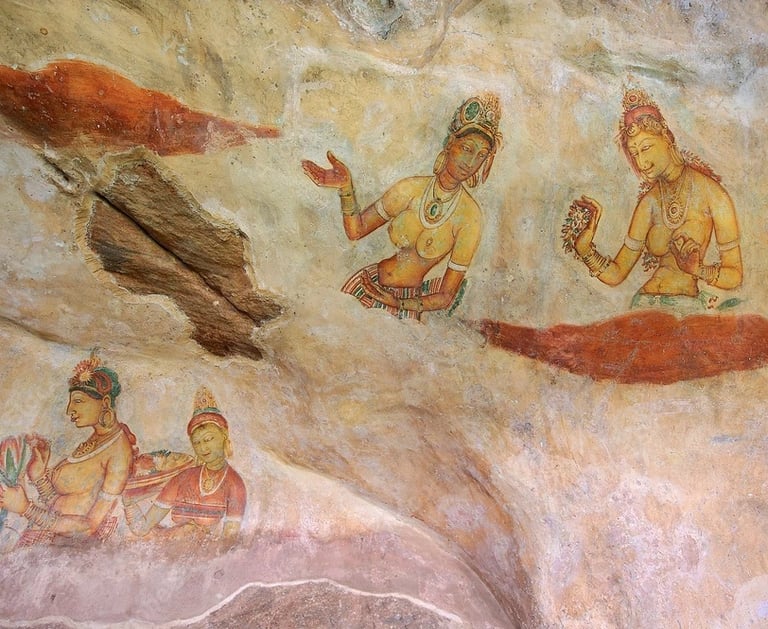
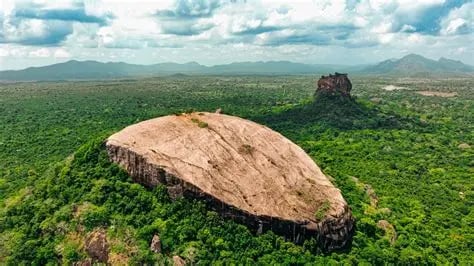
Sigiriya Highlights: Must-See & Do
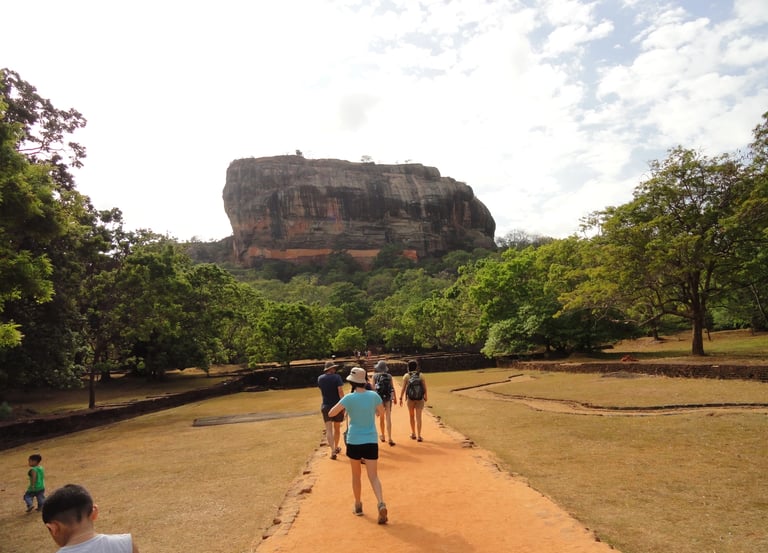
Gal Vihara (The Rock Temple)
Considered the pinnacle of Sinhalese rock carving, Gal Vihara features four colossal Buddha statues sculpted directly into the face of a single massive granite boulder during the 12th century.
What to look for: A large seated meditative Buddha, a smaller seated Buddha inside an artificial cavern, a 7-meter-tall standing Buddha with crossed arms (often interpreted as depicting sorrow over the Buddha’s passing), and a serene 14-meter reclining Buddha.
The Sacred Quadrangle (Dalada Maluwa)
A raised, compact terrace housing the highest concentration of architectural masterpieces in the ancient city. Because these structures once housed the Sacred Tooth Relic, temple etiquette is strictly enforced here.
Polonnaruwa Vatadage: An 18-meter-wide circular relic house featuring four seated Buddhas facing the cardinal directions, intricate guard stones, and one of Sri Lanka’s finest carved moonstones.
Hatadage & Atadage: Ancient tooth-relic shrines built by King Nissanka Malla and King Vijayabahu I, respectively.
Nissanka Latha Mandapaya: A unique stone pavilion featuring pillars carved to resemble undulating lotus stems topped with opening buds.
Thuparama Gedige: One of the few surviving ancient image houses in Sri Lanka that still retains its original vaulted brick roof.
Royal Palace Complex of King Parakramabahu I
Located near the southern entrance, these towering brick ruins are all that remain of a palace that once stood seven stories high and contained over 1,000 chambers.
What to look for: Thick brick walls showing burn marks from ancient invasions, the Council Chamber (Audience Hall) decorated with finely carved friezes of elephants and lions, and the Kumara Pokuna (Royal Bath) fed by an underground stone aqueduct system.
Rankoth Vehera
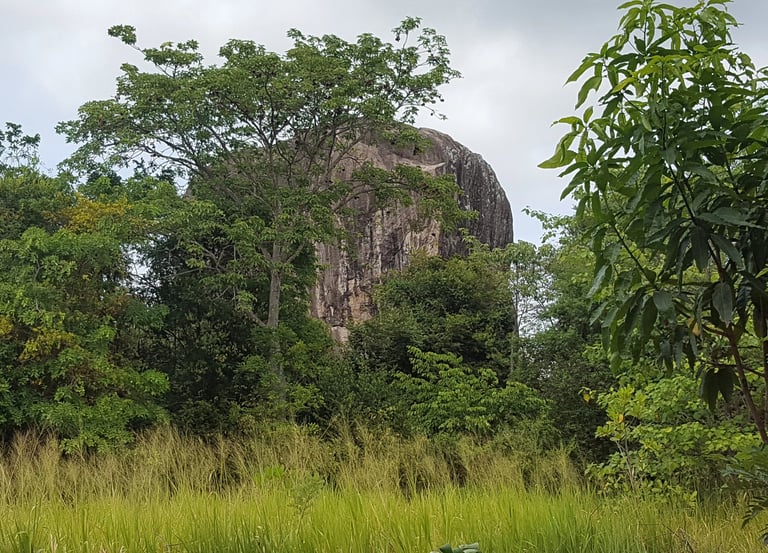
Commissioned by King Nissanka Malla, this 54-meter-high brick stupa is the largest in Polonnaruwa and the fourth largest in Sri Lanka. Built in the classic bubble-shaped tradition of Anuradhapura, it sits on a wide square terrace surrounded by smaller shrines and dense forest.
Lankatilaka Image House & Kiri Vehera
Standing side by side in the Alahana Pirivena monastic complex, these two structures showcase the dramatic scale of 12th-century brick architecture:
Lankatilaka Viharaya: A towering gedige (hollow brick shrine) flanked by massive 17-meter-high entrance pillars. Inside stands a monumental, headless 12.5-meter brick Buddha statue.
Kiri Vehera: Built by Queen Subhadra (wife of King Parakramabahu I). Its name means "Milk-White," earned because its original white lime plaster remained intact when archaeologists cleared the jungle after 700 years.
Shiva Devale No. 2
The oldest surviving structure in Polonnaruwa, dating back to the 11th-century South Indian Chola occupation. Constructed entirely of cut stone rather than brick, this compact Hindu temple highlights the city's multi-religious heritage.
Tivanka Image House (Northern Zone)
Located at the northern tip of the archaeological park, this vaulted brick shrine houses a statue of the Buddha in the tivanka ("thrice-bent") posture. Its interior walls preserve some of the finest 12th-century Jataka tale frescoes remaining in Sri Lanka.
Parakrama Samudra (Sea of Parakrama)
A colossal irrigation reservoir built by uniting five smaller tanks. Covering over 2,500 hectares, its embankment offers scenic sunset views, cooling breezes, and frequent sightings of waterbirds and local fishermen.
Frequently asked questions
Q: How much is the entrance ticket to Polonnaruwa, and where do I buy it?
A: Foreign adult tickets cost $30 USD (payable in USD, LKR, or by credit card), and children aged 6–12 are $15 USD (under 6 is free).
You must purchase your ticket at the Polonnaruwa Archaeological Museum before entering the main ruins gate.
Q: How long does it take to explore the ancient city?
A: How long does it take to explore the ancient city? Plan for 3 to 4 hours to see the main highlights comfortably. Because the archaeological zone stretches roughly 4 to 6 kilometres from south to north, visiting every outlying ruin at a relaxed pace can take half a day.
Q: What is the best way to get around the ruins?
A: Bicycle: The most popular and atmospheric option—the terrain is flat and shady, and rentals are widely available outside the museum.
Tuk-tuk or Private Vehicle: Ideal during the midday heat. Many local tuk-tuk drivers also act as informal guides.
On Foot: Not recommended for the entire complex due to distances and tropical temperatures, though you will walk inside each cluster.
Q: When is the best time of day and year to visit?
A: Arrive right when the gates open at 7:30 AM (or after 3:30 PM) to avoid peak midday heat and tour buses. Seasonally, December to April offers the driest weather, while May to September is dry in the Cultural Triangle and pairs well with wildlife safaris at nearby Minneriya National Park.
Q: What is the dress code and temple etiquette?
A: Because Polonnaruwa contains active Buddhist shrines, visitors must cover their shoulders and knees. You must also remove shoes and hats before stepping onto sacred platforms like the Sacred Quadrangle and Gal Vihara. Tip: Bring thick socks, as the stone slabs become scorching hot by mid-morning.
Plan Your Unforgettable Colombo Stop with Lanka Holiday Guide
Whether you are just beginning your Sri Lanka adventure or capping off a magical journey, Colombo is the perfect point to transition between local discovery. Colombo is just 30-45 minutes from the Bandaranayake International Airport (Colombo Airport)
Explore Beyond the Capital: Use Colombo as your launchpad to the island’s interior. Discover ancient temples, lush tea country, or the golden beaches down south.
Explore our Sri Lanka Tour Packages
Need a Personalised Itinerary? Contact our expert travel planners to seamlessly integrate your Colombo city break with the rest of your Sri Lankan vacation.